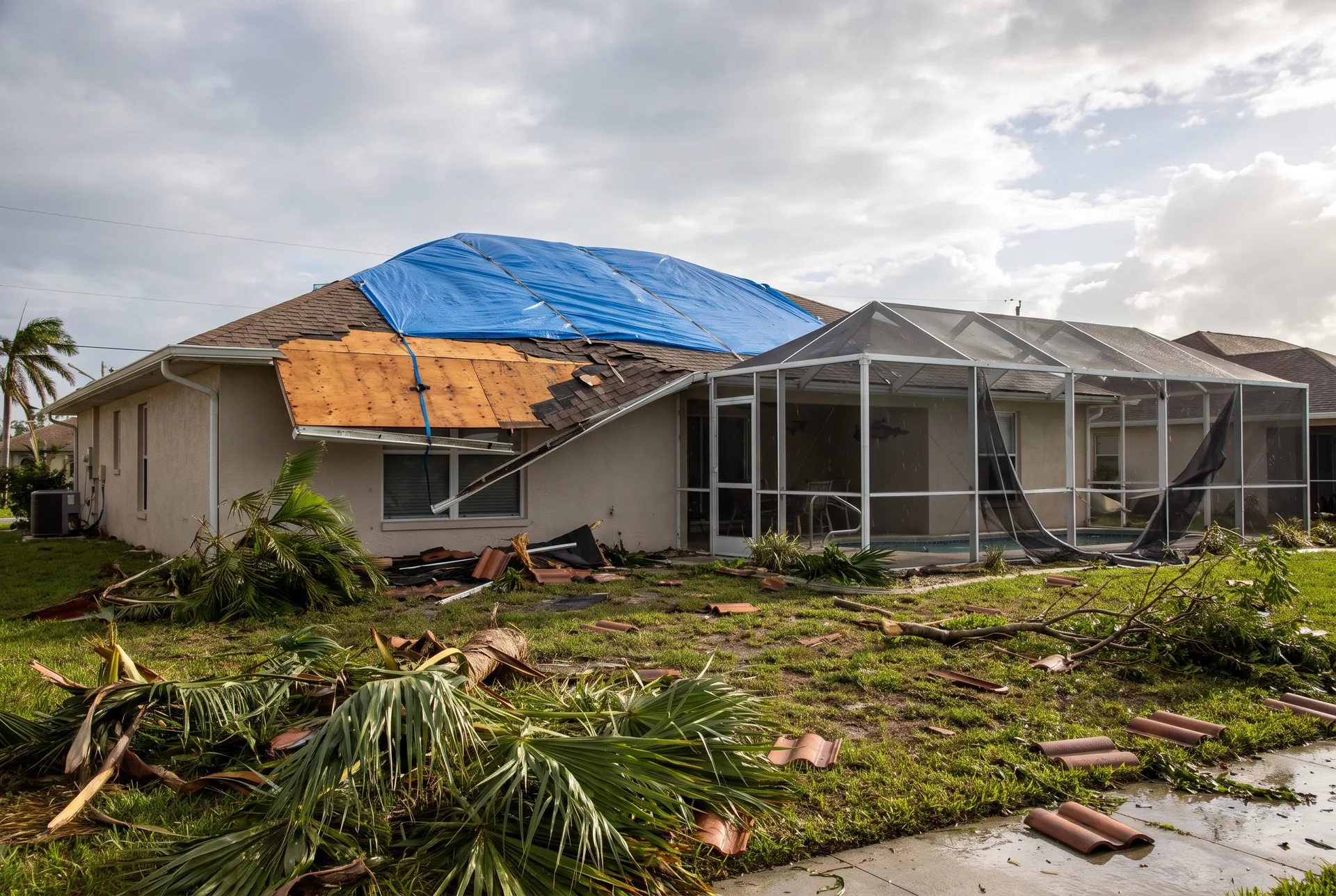
Cape Coral has been through Charley, Irma, Ian, Helene and Milton in twenty years, and every one of them left the same pattern on the roofs: lifted shingle edges and creased tabs on the older southeast homes, cracked and displaced tile on the southwest tile roofs, ridge caps and hip tiles gone, screen enclosures peeled back and their flat roofs torn at the tie-in, and on the worst-hit streets, decking and trusses exposed. What matters in the first week is stopping the water; what matters in the first month is an honest record of what the storm did before repairs and weather blur the evidence.
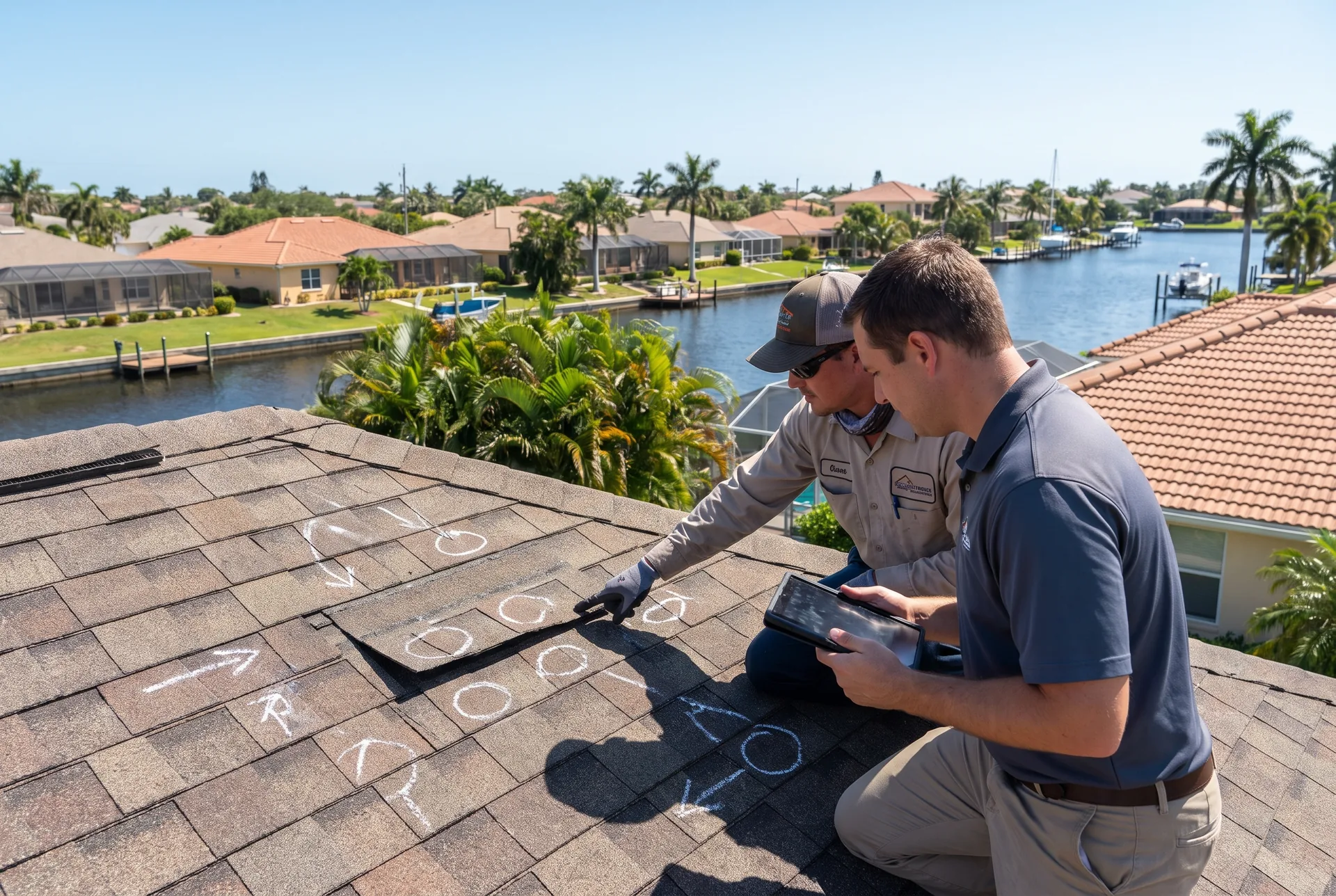
We do both. Emergency tarping and dry-in any hour, with the tarp charge credited toward the repair. Then a full walk of the roof and attic with photos — every lifted shingle, every cracked tile, every wet truss — written into a report that describes the damage, when it happened and what it will take to fix. That report is yours. Whether you file a claim is your decision; if you do, we meet the adjuster on the roof and build the estimate to the scope your carrier approves. And we build back to current code, because a roof repaired the way it was originally built is a roof that comes off the same way next time.
What's included
Emergency tarping & dry-in
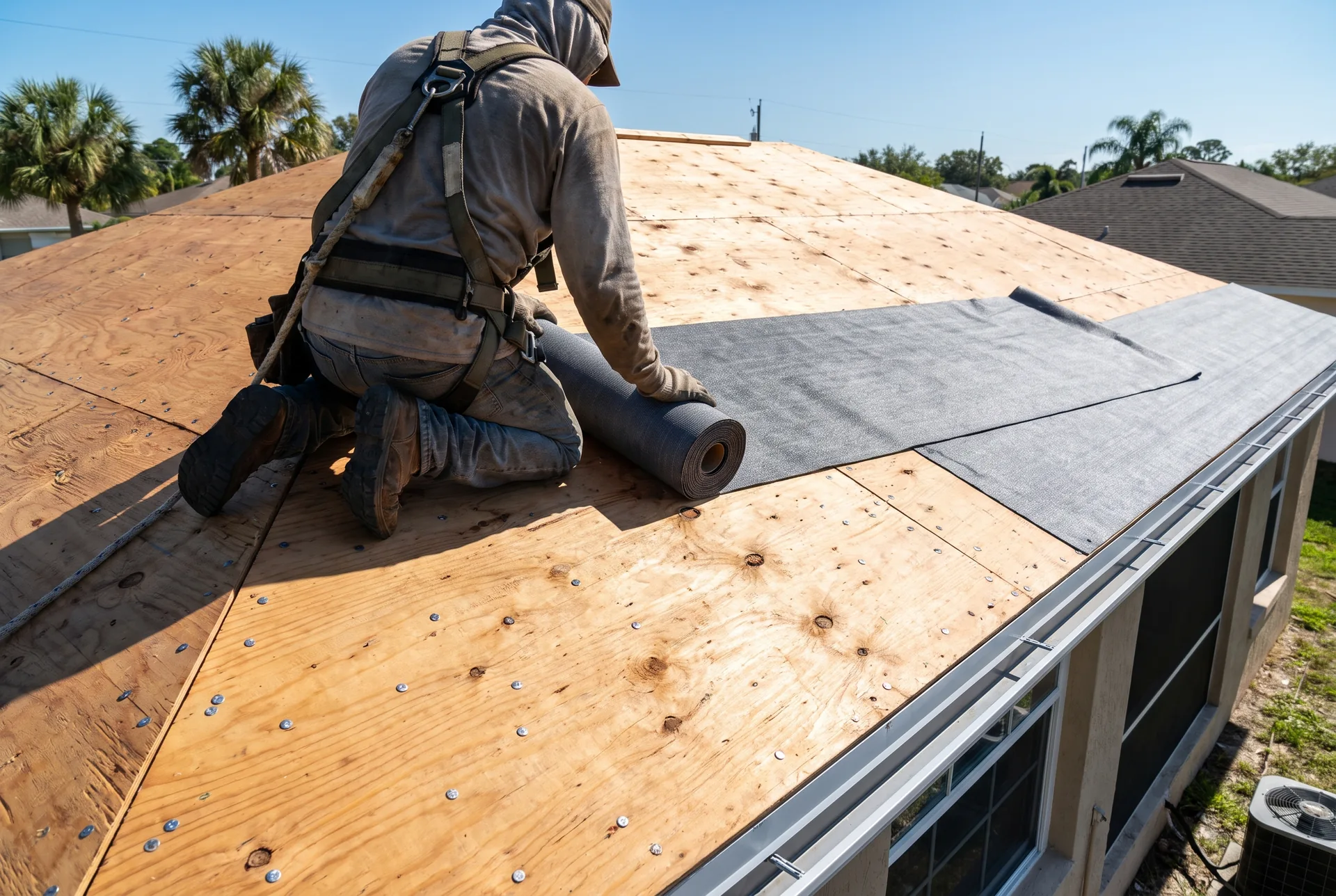
Any hour. Synthetic underlayment or heavy tarp fastened properly, not sandbags and hope. Credited toward the repair.
Damage documentation
Photos of every affected area, attic moisture readings, a dated written report — the evidence you'll want whether or not you file.
Adjuster meetings
We meet your adjuster on the roof, walk the damage together, and answer the questions about age and cause honestly.
Repair or replacement to code
Wind-lifted sections repaired with the deck sealed and the attachment corrected; full replacement when that's what the damage calls for.
Enclosure & flat-roof tie-ins
Torn lanai roofs and flashing at the enclosure rebuilt properly — the most common storm leak in the city.
No deductible games
Florida law forbids roofers from paying or waiving your deductible or offering gifts for a claim. We follow it. Your deductible is yours.
Storm damage repair cost in Cape Coral, FL
| Job | Typical price | Notes |
|---|---|---|
| Emergency tarp / dry-in (up to 4 squares) | $400 – $1,200 | Any hour; credited to the repair |
| Wind damage repair — shingle section | $700 – $3,500 | Deck resealed, 6-nail pattern |
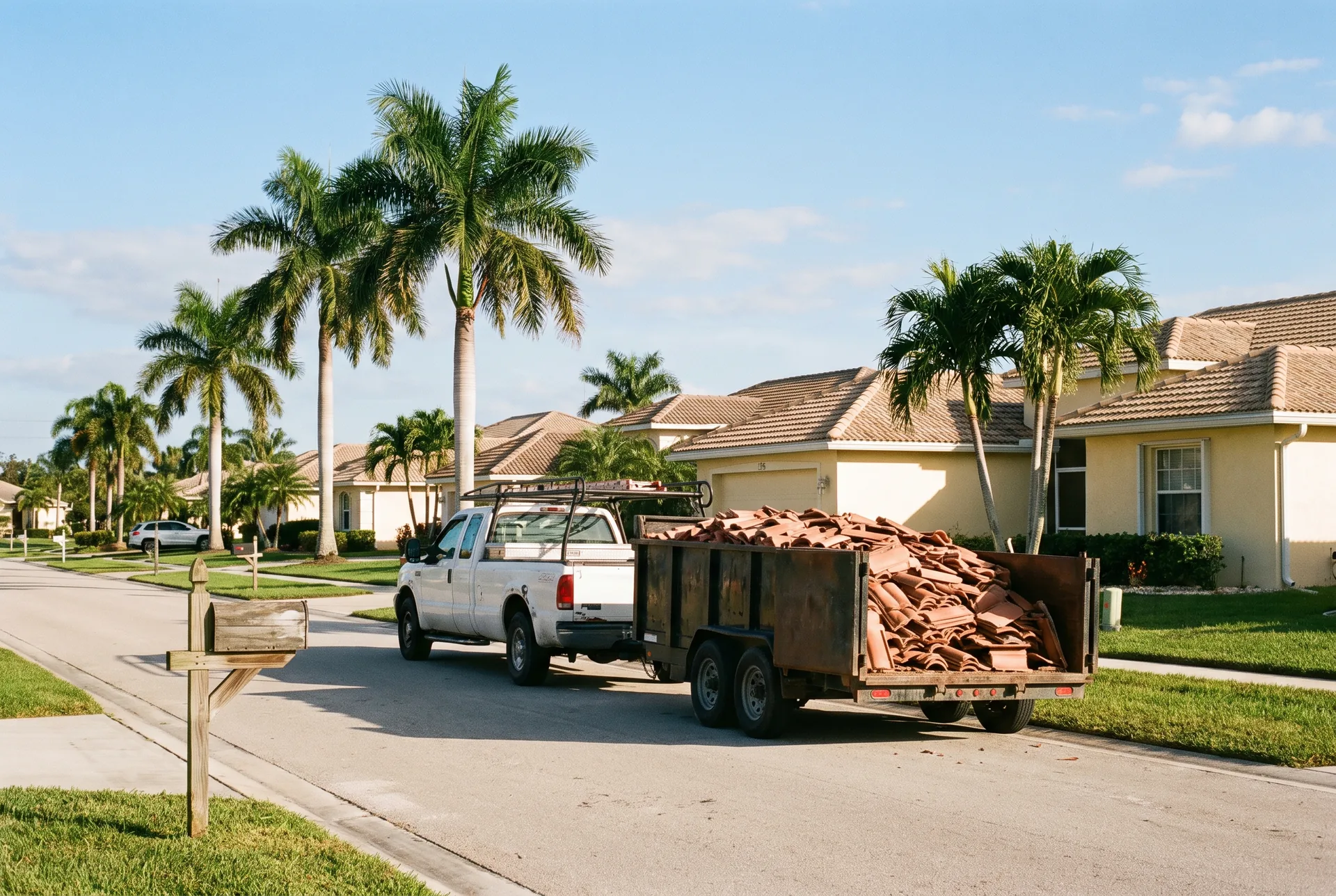
| Wind damage repair — tile section | $900 – $4,500 | Underlayment replaced, tile relaid |
| Ridge / hip cap replacement | $500 – $2,200 | Foam or mechanical attachment |
| Lanai flat roof rebuild after enclosure damage | $2,500 – $9,000 | Membrane, flashing, tie-in |
| Full replacement after storm (shingle) | $13,000 – $24,000 | Typical 2,000–2,400 sq ft home |
| Full replacement after storm (tile or metal) | $28,000 – $52,000 | See replacement pricing |
These are 2026 Lee County ranges so you can budget. Your written price is itemized — tear-off, decking allowance, underlayment, covering, flashing, permit, haul-off — and good for 30 days.
What Ian, Helene and Milton did to Cape Coral roofs
Ian (September 28, 2022) came ashore at Cayo Costa as a near-Category 5 storm with the worst of the wind field over Pine Island, Matlacha, Cape Coral and Fort Myers Beach. It peeled three-tab shingle off the older southeast Cape by the block, stripped ridge and hip tiles off thousands of tile roofs, and put surge through the ground floors of the Yacht Club and the canal streets off Cape Coral Parkway. Helene (September 2024) was mostly a surge event here; Milton (October 2024) brought a second round of wind and tornado damage. The roofs that came through best were the ones with sealed decks, six-nail shingle patterns, foam-set or screwed tile and strapped trusses — which is now the code, and is how we build.
Recent work
Questions we get about hurricane & storm damage
What should I do first after a hurricane damages my roof?
Get it dry. Call us for a tarp, photograph everything you can safely see from the ground and inside, and keep receipts for the tarp and any water cleanup. Don't let anyone start permanent repairs until the damage has been documented — and don't sign anything on the doorstep from a crew you didn't call.
Do you help with the insurance claim?
We document the damage and give you the report; filing is your call. If you file, we meet the adjuster and build the estimate to the approved scope. We don't act as public adjusters, we don't take assignment of benefits, and we don't tell you what to say to your carrier — Florida's roofing statute (F.S. 489.147) prohibits contractors from soliciting claims, and we take that seriously.
My roof is old. Will the carrier just say it was wear and tear?
They might, and sometimes they're right. A creased shingle tab and a torn-off tile field look different from a roof that was already failing, which is why the photos matter. We tell you honestly what we think the adjuster will conclude before you decide anything.
How long until you can get to me after a storm?
Tarps first, worst first, in the order calls come in — usually within a day or two after the roads are open. Permanent repairs and replacements are scheduled after the county reopens permitting, which after Ian took about a week.
Should I let the out-of-state crews do it?
Be careful. After Ian and again after Milton, crews with out-of-state plates worked the Cape for a few weeks, took deposits, did fast work and left. Florida requires a state-licensed roofing contractor to pull the permit and do the work. Ask for the license number and look it up at myfloridalicense.com before you hand anyone a check.
Will my repaired roof be built to current code?
Yes. Since the 2022 law change, if your roof was permitted after March 1, 2009, only the repaired section has to meet current code; if it's older, more than 25% damaged means the whole roof comes up to code. Either way, what we install gets a sealed deck, proper underlayment and the attachment the wind code calls for.