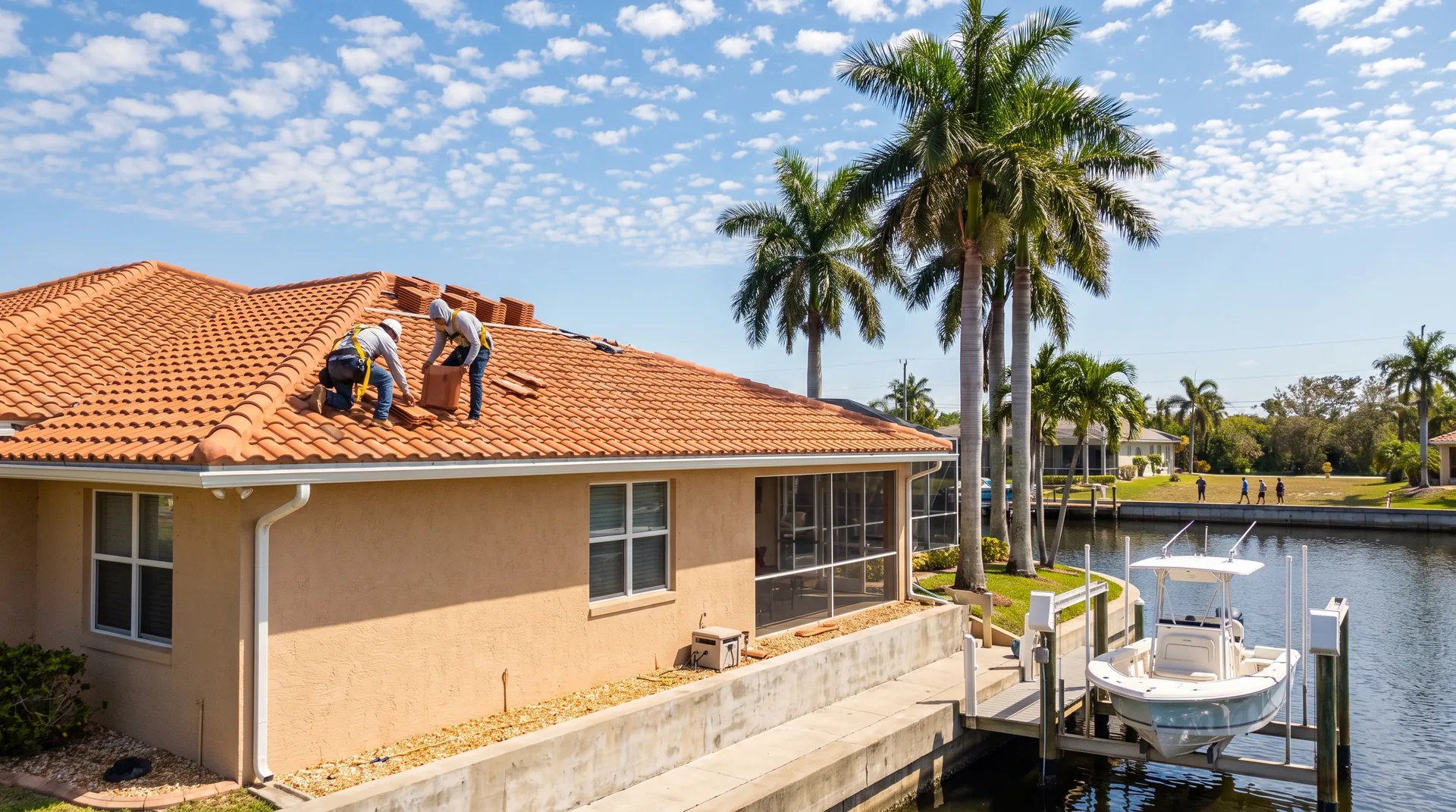
Stand at the end of any canal in the Southwest Cape and you'll see all three: concrete tile on the 1990s homes, standing-seam metal on the new elevated ones, architectural shingle on the older ranches. Each is the right roof for somebody. Here's how they compare in Lee County, not in a brochure.
| Factor | Architectural shingle | Metal (standing seam / 5V) | Concrete tile |
|---|---|---|---|
| Installed cost (2,000–2,400 sq ft home, 2026) | $13k – $24k | $22k – $48k | $30k – $52k |
| Realistic lifespan here | 18–25 yrs | 40–50 yrs | Tile 40–50; underlayment 20–25 |
| Wind rating (properly installed) | Class H, 150 mph | Highest uplift ratings | Excellent when foam-set or screwed |
| Weight | ~3 lb/sq ft | ~1–1.5 lb/sq ft | ~9–12 lb/sq ft |
| Salt air | Fine | Aluminum: immune. Steel: keep it 2+ miles inland | Fine |
| Citizens roof-age limit | 25 yrs | 50 yrs | 50 yrs (but underlayment fails first) |
| Wind mitigation credits | Same as any code-built roof | Same | Same |
| Heat | Warmest attic | Coolest (reflective finishes) | Cool (air gap under tile) |
| Repair | Easy, cheap | Panel replacement; fasteners on 5V | Tile-by-tile; boneyard matching |
| Resale in Cape Coral | Neutral if under 15 yrs | Premium | Premium (the "Cape Coral look") |
Shingle
The economical roof and, done right, a good one. The version that survives here is architectural (not three-tab), Class H wind-rated, six nails per shingle, hand-sealed edges, over a re-nailed sealed deck with self-adhered underlayment. Its weakness is time: UV and salt air get it in 18 to 25 years, and insurers start asking questions at 15. Choose it when the budget is the budget, when you're not staying 20 years, or on a rental where the numbers matter more than the look.
Metal
The roof that made it through Ian on the elevated homes, and the one the new Northwest Cape is being built with. Standing seam (concealed clips, no exposed fasteners) is the premium version; 5V crimp is the traditional Florida profile at a lower price. In aluminum it's immune to salt; in Galvalume steel it's a little cheaper and fine inland. It's light, it's the best wind performer, it reflects heat, and Citizens treats it as a 50-year roof. It costs about what tile does. Choose it near the water, on any elevated home, or anywhere you want to do this once.
Tile
The Cape Coral look, and a 40-to-50-year covering. The catch is what's under it: the underlayment lasts 20 to 25 years, so a tile roof is really a tile roof plus one re-underlayment in its life. It's heavy — a shingle-to-tile conversion needs an engineer's letter — and it costs the most up front. But it's quiet, it's cool, it holds value in the tile neighborhoods, and properly attached (foam-set or screwed, never loose on battens) it's excellent in wind. Choose it when the neighborhood is tile, when you're staying, and when the budget allows.
The thing that matters more than the material
Attachment and underlayment. The roofs that failed in Ian weren't a particular material — they were four-nail shingle, loose tile on battens, and metal over bare felt. The roofs that stayed were built to the wind code: sealed deck, secondary water barrier, ring-shank nails, foam or screws, strapped trusses. Any of the three, built that way, is a hurricane roof. That's the part we don't compromise on regardless of what you choose.
Related questions
Is metal really the same price as tile now?
Close. Standing-seam aluminum and concrete tile both land in the $30,000–$50,000 range on a typical home; 5V metal is cheaper than tile, clay tile is more. Get all three priced on your roof — the comparison is different on every house.
Can I switch from shingle to tile?
Only with an engineer's letter confirming the trusses can take the weight, and sometimes not without reinforcing them. Shingle to metal is easy — metal is lighter than shingle.
Which roof is best for insurance?
Any code-built roof earns the same wind mitigation credits. Metal and tile get you to Citizens' 50-year limit; shingle is 25. For private carriers, a new roof of any type resets the 15-year clock.
Which is coolest?
Metal with a reflective Kynar finish, then tile (the air gap under the tile helps), then shingle. Attic ventilation matters as much as the covering.
Does tile survive hurricanes?
Properly attached, yes. Foam-set or screwed tile on a sealed deck came through Ian well. Loose tile on battens or crumbled mortar didn't. Attachment is everything.
What do you recommend most often in Cape Coral?
Metal near the water and on elevated homes; tile re-underlayment on the 1990s tile roofs where the tile is sound; code-built architectural shingle where the budget decides. We'll price the options side by side.